Severe hypercapnic COPD for shoulder surgery under a block74-year-old man, 62 kg, for elective arthroscopic rotator cuff repair in the beach-chair position
From memory: the diagnosis and the notes are hidden. Answer each question aloud, then press Show.
Know this first
- Interscalene block often paralyses the phrenic nerve; risky in moderate to severe obstructive disease.
- The suprascapular nerve gives about 70% of the shoulder joint's supply; blocking it spares the diaphragm.
- FEV1 under 60% predicted raises the risk of serious pulmonary complications.
- For a man who retains CO2, aim SpO2 at 88–92%.
- Stopping smoking for 4–8 weeks is needed to cut pulmonary complications.
The patient
The examiner asks
Answer aloud, then press Show.
Consider
What are your main concerns?
Show the answerHide the answer
- A 74-year-old with severe hypercapnic COPD on home oxygen, for elective shoulder repair, beach-chair. Patient
- At 74 and hypercapnic, his delirium risk is real; it climbs after 60, so I record his baseline.
- His FEV1 of 38% is well under 60% predicted, so pulmonary complication risk is high. Disease
- He retains CO2, so I aim for SpO2 88–92%, not higher.
- A standard interscalene block would paralyse his hemidiaphragm, which he cannot afford. Surgery
- In beach-chair, an arm cuff reads higher than the pressure reaching his brain.
Prepare
How do you assess and optimise him?
Show the answerHide the answer
- First, is he in an exacerbation? Active chest infection means this elective case waits. Disease
- Arterial gas on his home oxygen as his baseline: PaCO2 52, PaO2 58.
- Breathless after one flight: well short of the three flights that mark lower risk.
- Echo for his right ventricle; up to half of COPD patients have RV dysfunction.
- He should stop smoking now; 4–8 weeks off is what lowers pulmonary complications.
- He takes every inhaler as usual that morning; salbutamol 2–4 puffs 20–30 minutes beforehand.
- Incentive spirometry and deep breathing taught before surgery. After surgery
Plan
What anaesthetic will you give?
Show the answerHide the answer
- No interscalene block: phrenic palsy is a well-known effect, worst in severe obstructive disease. Surgery
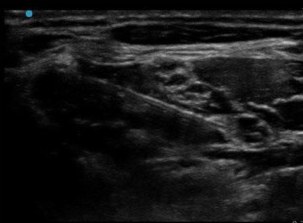
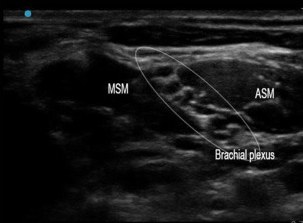
- Low-volume (5–15 mL) anterior suprascapular block: phrenic-sparing, not phrenic-proof.
- Ropivacaine kept under 3 mg/kg, with lipid emulsion in the room. Stem trigger
- Light sedation only; over-sedating him drives up his CO2 and pulmonary pressure. Disease
- If GA is needed: about 6 mL/kg, modest PEEP, slow rate and a long expiratory time. Airway
- I correct his BP reading to head level and keep cerebral perfusion in the beach-chair. Surgery
- NIV ready in recovery; COPD is a recognised reason for postoperative NIV. After surgery
Crisis
Twenty minutes after the block, before incision, he is breathless and anxious. SpO2 84% on 2 L/min, RR 30, BP 150/90, HR 110. What do you do?
Show the answerHide the answer
- Call for help, sit him fully upright and titrate oxygen up to reach 88–92%. (Crisis)
- Likely phrenic spread even from this block; but I check for LAST and pneumothorax.
- If LAST: midazolam 1–5 mg for seizures, and lipid 1.5 mL/kg over 2–3 minutes at the first serious sign.
- Blood gas now and compare with his baseline PaCO2 of 52.
- Rising CO2 or tiring: NIV and no further sedation.
- Surgery waits; if NIV fails, I intubate and ventilate slowly with long expiration.
Crisis
In recovery, after morphine for breakthrough pain, he is drowsy. RR 8, SpO2 96% on 6 L/min by mask. Gas: pH 7.22, PaCO2 82 mmHg. What do you do?
Show the answerHide the answer
- Acute-on-chronic hypercapnia from opioid plus too much oxygen in a CO2 retainer. Crisis
- Oxygen turned down to keep his SpO2 at 88–92%.
- Naloxone in 40 mcg IV steps every 2 minutes, at most 200 mcg, until his rate rises.
- NIV now; postoperative COPD with acidosis is where it helps.
- Repeat gas soon; if he stays drowsy or acidosis worsens, I intubate.
- Further analgesia from the block and paracetamol; HDU tonight. After surgery
Fatal mistakes
- An interscalene block in a man with no respiratory reserve.
- High-flow oxygen pushing his CO2 higher.
- Big tidal volumes at a fast rate, trapping gas.
- Sedating his breathlessness instead of treating it.
Checked against: Miller 10e · Global Strategy for the Diagnosis, Management, and Prevention of Chronic Obstructive Pulmonary Disease, 2025 Report · Barash 9e
Report a problem with this case
Mark Got it only if you said every point. Again brings the case back tomorrow; Got it brings it back in 3, then 7, 14 and 30 days.